01
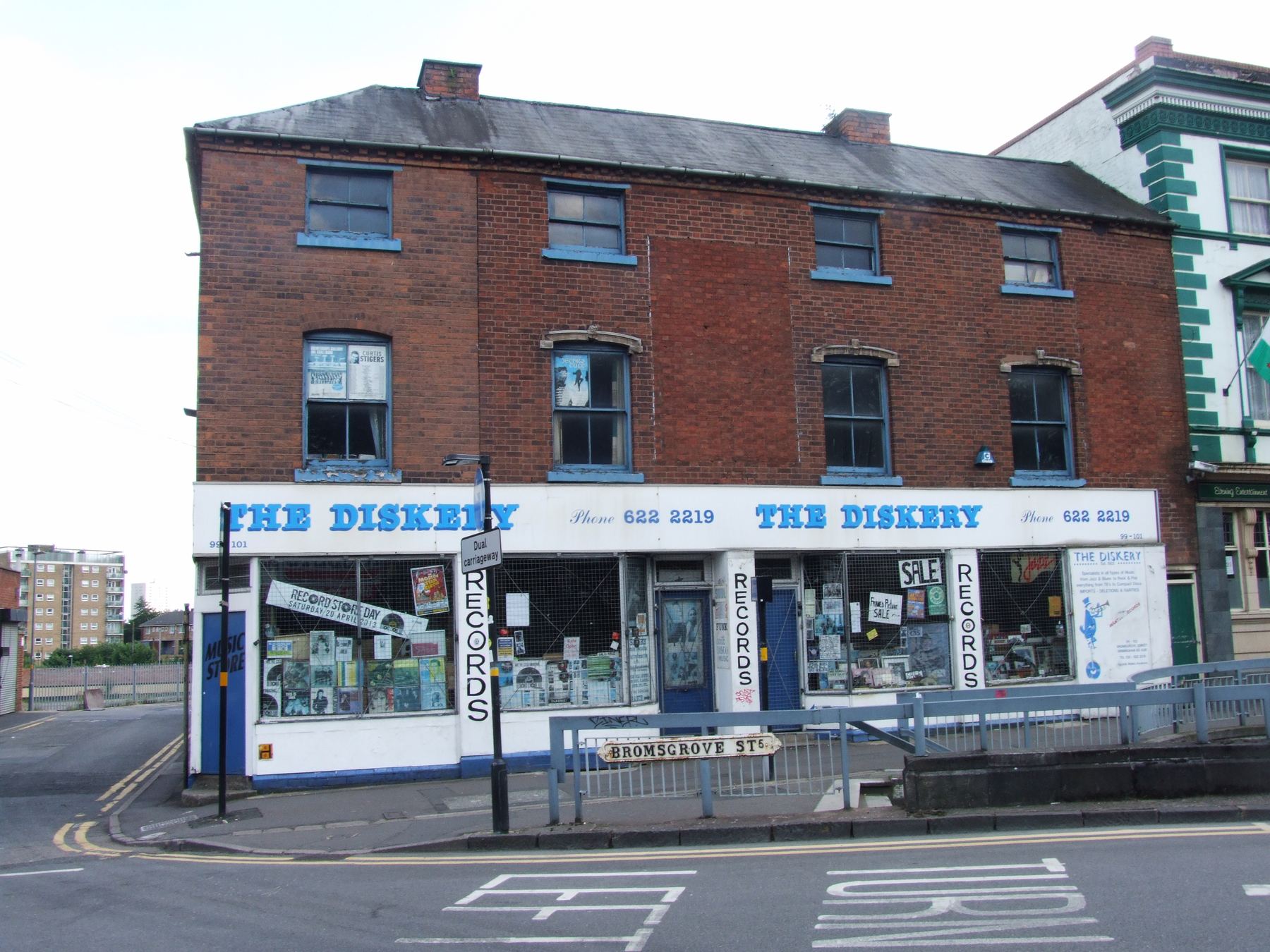
Britain's oldest surviving record shop has no website at all.
- Observation
- The Diskery was founded in 1952 by jazz collector Morris Hunting, has traded continuously for 74 years, and moved exactly once (Hurst Street to Bromsgrove Street, 1972). It is older than every chain record store in Britain, every supermarket music section, and every streaming service combined. It has never had a website. thediskery.com currently redirects to a HugeDomains parking page that lists the domain for sale. thediskery.co.uk does not resolve at all (ECONNREFUSED). The shop's entire web presence is the Facebook page at facebook.com/TheDiskery, plus a Discogs record-store profile and an Instagram account.
- Impact
- Every search for "oldest record shop Birmingham", "rare vinyl Birmingham", "78rpm jazz UK" returns Yelp, Yell, Cylex, FindOpen and an InYourPocket directory listing before it returns anything The Diskery actually owns. The HugeDomains for-sale page for thediskery.com sits inside the top fifteen Google results for "the diskery", a literal "this domain is for sale" page about Britain's oldest record shop. New crate-diggers visiting Birmingham for the weekend find third-party listings of varying accuracy. AI assistants asked "where is the oldest record shop in Britain" cannot cite a canonical source because none exists.
- Cause
- A small, very busy shop where Lee Dearn, Paul Dearn, Liam Scully and Danny Young are on the floor six days a week, and the energy goes into stock, not software. Facebook is the easiest channel; Discogs handles the catalogue overlap; everything else has been deferred for several years.
- After rebuild
- After rebuild: thediskery.co.uk becomes a real one-page-plus-deep-pages site. Hero says "Britain's oldest surviving independent record shop, since 1952" in serif type tall enough to read from the pavement. Sections cover the act-of-revenge founding story, the 100,000-records stock, the 12,000 shellac 78s, the wind-up gramophones, the hours, the location. The Facebook page keeps doing what it does best (daily posts, gigs, RSD announcements); the site catches everyone who searches Google instead of Facebook.